


Difference Between White Wine and Red Wine: A Complete Guide for Wine Lovers

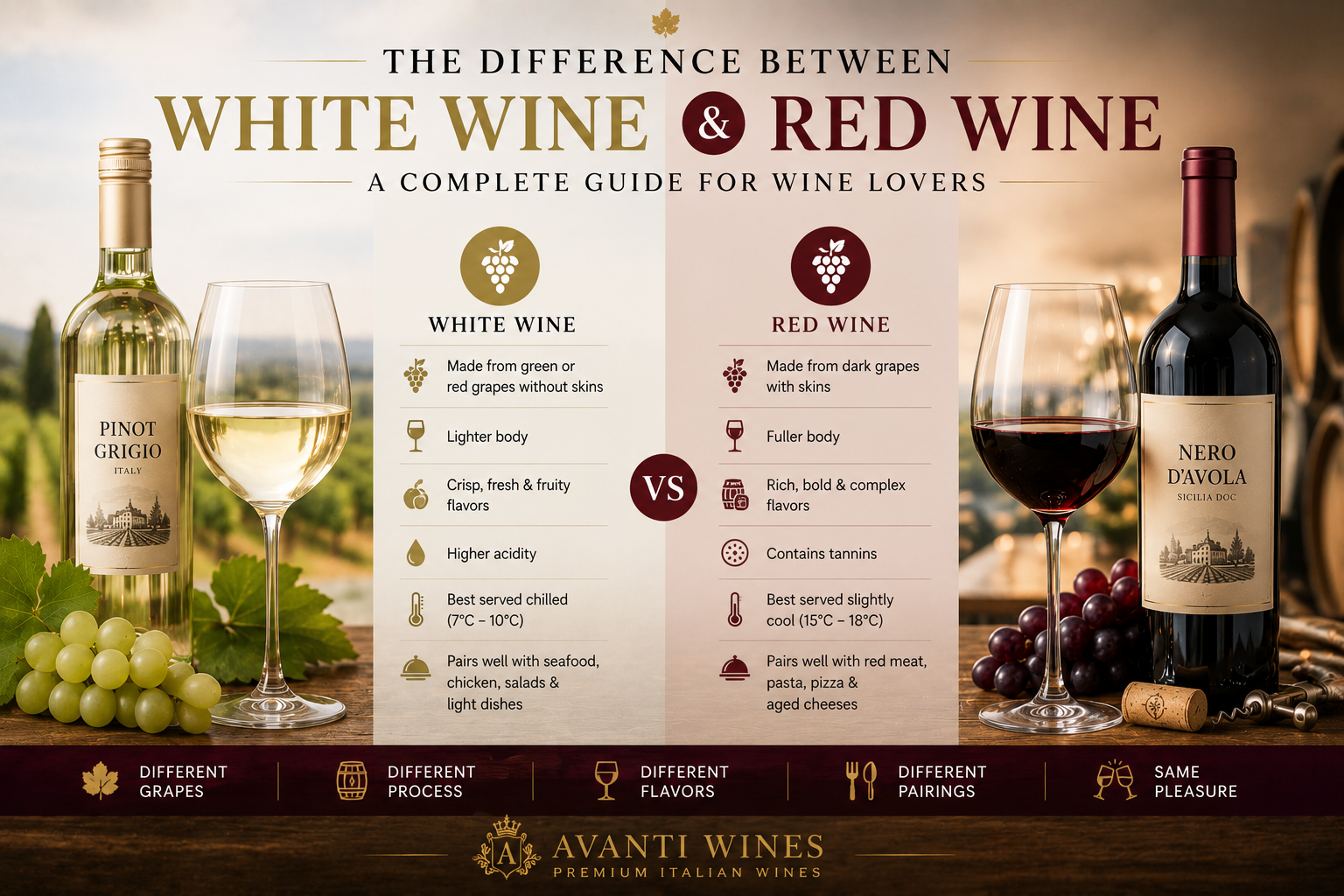
Whether you’re new to wine or looking to expand your knowledge, one of the most common questions is about the difference between white wine and red wine. While the colour is the most obvious distinction, these two styles differ in much more than appearance. From the grapes used and the winemaking process to flavour, food pairings, and serving temperatures, each offers a unique experience.
At Avanti Wines, we believe understanding these differences helps you choose the perfect bottle for every occasion. Whether you enjoy a crisp white with seafood or a rich red with a hearty meal, this guide will explain everything you need to know.
Table of Contents
- What Is the Difference Between White Wine and Red Wine?
- How White and Red Wine Are Made
- Taste Differences
- Colour and Grape Varieties
- Alcohol Content
- Serving Temperature
- Food Pairings
- Health Considerations
- Which Wine Should You Choose?
- Explore Italian Wines at Avanti Wines
- Frequently Asked Questions
- Final Thoughts
What Is the Difference Between White Wine and Red Wine?
The biggest difference between white wine and red wine lies in how the wines are produced.
Red wine is made using dark-skinned grapes that ferment with their skins, seeds, and sometimes stems. This process gives red wine its deep colour, fuller body, and tannins.
White wine is usually made by pressing the grapes and fermenting only the juice, with the skins removed before fermentation. This creates a lighter colour and a fresher, crisper flavour profile.
Although white wine is commonly made from green grapes, it can also be produced from red grapes if the skins are removed immediately after pressing.
How White and Red Wine Are Made
Red Wine Production
The production of red wine includes:
- Harvesting dark-skinned grapes
- Crushing the grapes
- Fermenting the juice with grape skins
- Aging in stainless steel tanks or oak barrels
- Bottling
The grape skins provide colour, tannins, and much of the wine’s complexity.
White Wine Production
White wine follows a different process.
The grapes are pressed first, separating the juice from the skins before fermentation begins.
This results in wines that are generally:
- Lighter
- Fresher
- More delicate
- Higher in acidity
Taste Differences
One of the easiest ways to understand the difference between white wine and red wine is by comparing their flavours.
Red Wine
Common flavour notes include:
- Blackberry
- Cherry
- Plum
- Blackcurrant
- Chocolate
- Spice
- Vanilla (if oak-aged)
Red wines usually have:
- Fuller body
- Richer texture
- Noticeable tannins
- Longer finish
White Wine
Typical flavours include:
- Apple
- Pear
- Citrus
- Peach
- Melon
- Floral notes
- Tropical fruit
White wines are generally:
- Crisp
- Refreshing
- Light-bodied
- Bright and vibrant
Colour and Grape Varieties
The colour of wine depends mainly on the grape skins.
Red Wine Grapes
Popular varieties include:
- Merlot
- Cabernet Sauvignon
- Pinot Noir
- Aglianico
- Nero d’Avola
- Montepulciano
White Wine Grapes
Common varieties include:
- Pinot Grigio
- Sauvignon Blanc
- Chardonnay
- Riesling
- Garganega
Each grape variety contributes its own unique aromas and flavours.
Body and Texture
Another major difference is the body of the wine.
| Feature | Red Wine | White Wine |
|---|---|---|
| Body | Medium to Full | Light to Medium |
| Tannins | High | Very Low |
| Acidity | Medium | Medium to High |
| Texture | Rich and structured | Crisp and refreshing |
Alcohol Content
Although there are exceptions, red wines often contain slightly more alcohol than white wines.
Typical ranges are:
- White wine: 11%–13.5% ABV
- Red wine: 12.5%–15% ABV
The final alcohol level depends on grape variety, climate, and winemaking style.
Serving Temperature
Serving wine at the correct temperature significantly improves the tasting experience.
White Wine
Serve chilled between 7°C and 10°C.
Ideal for:
- Summer gatherings
- Seafood dinners
- Outdoor lunches
Red Wine
Serve slightly below room temperature, around 15°C to 18°C.
Ideal for:
- Roast dinners
- Steak
- Cheese boards
Avoid serving red wine too warm, as excessive heat can overpower its flavours.
Food Pairings
Wine becomes even more enjoyable when paired with the right food.
| Food | Best Choice |
|---|---|
| Seafood | White Wine |
| Chicken | White Wine |
| Salads | White Wine |
| Pasta with Tomato Sauce | Red Wine |
| Steak | Red Wine |
| Lamb | Red Wine |
| Pizza | Red Wine |
| Soft Cheese | White Wine |
| Aged Cheese | Red Wine |
These pairings are guidelines rather than strict rules. Ultimately, personal preference matters most.
Health Considerations
Both red and white wine contain antioxidants, but red wine generally has higher levels because it ferments with the grape skins.
Moderate wine consumption may be part of a balanced lifestyle for many adults, but it should always be enjoyed responsibly.
Which Wine Should You Choose?
Choosing between white and red wine depends on several factors.
Choose White Wine If You Prefer:
- Crisp flavours
- Citrus and fruit notes
- Lighter meals
- Warm-weather drinking
Choose Red Wine If You Prefer:
- Rich flavours
- Full-bodied wines
- Steak and hearty meals
- Complex aromas
Many wine lovers enjoy both styles depending on the occasion.
Explore Italian Wines at Avanti Wines
Whether you prefer red or white wine, Avanti Wines offers a carefully selected collection of premium Italian wines.
Campania Aglianico
A bold red featuring dark fruit, spice, and excellent structure.
Merlot Wine
A smooth, approachable red with soft tannins and ripe plum flavours.
Montepulciano d’Abruzzo
A versatile Italian red that pairs beautifully with pasta, pizza, and grilled meats.
Nero d’Avola
A rich Sicilian red known for blackberry, plum, and subtle spice.
Pinot Grigio
A crisp and refreshing white wine with citrus and green apple notes, perfect for seafood, salads, and summer dining.
Frequently Asked Questions
Is red wine stronger than white wine?
In many cases, yes. Red wines often have a slightly higher alcohol content, although this varies by style and producer.
Why is red wine darker than white wine?
Red wine gets its colour from fermenting with grape skins, while white wine is fermented without the skins.
Can white wine be made from red grapes?
Yes. If the grape skins are removed immediately after pressing, red grapes can be used to produce white wine.
Which wine is better for beginners?
Many beginners enjoy wines like Pinot Grigio or Merlot because they are approachable, balanced, and easy to drink.
Which wine pairs with more foods?
Both are versatile, but white wine generally complements lighter dishes, while red wine pairs better with richer meals and grilled meats.
Final Thoughts
Understanding the difference between white wine and red wine makes choosing the right bottle much easier. While red wines are known for their bold flavours, tannins, and rich character, white wines offer crisp acidity, refreshing fruit notes, and incredible versatility.
Neither style is better than the other—it simply depends on your personal taste, the food you’re serving, and the occasion.
Whether you’re enjoying a refreshing Pinot Grigio on a sunny afternoon or sharing a bottle of Campania Aglianico, Merlot, Montepulciano d’Abruzzo, or Nero d’Avola over dinner, Avanti Wines has a premium Italian wine to suit every palate.
Looking for your next bottle? Explore Avanti Wines’ collection of premium Italian wines, including Campania Aglianico, Merlot Wine, Montepulciano d’Abruzzo, Nero d’Avola, and Pinot Grigio, or browse the full wine collection to discover your perfect match.
Follow Us On Instagram!