


How to Store Leftover Wine: The Best Ways to Keep Red Wine Fresh

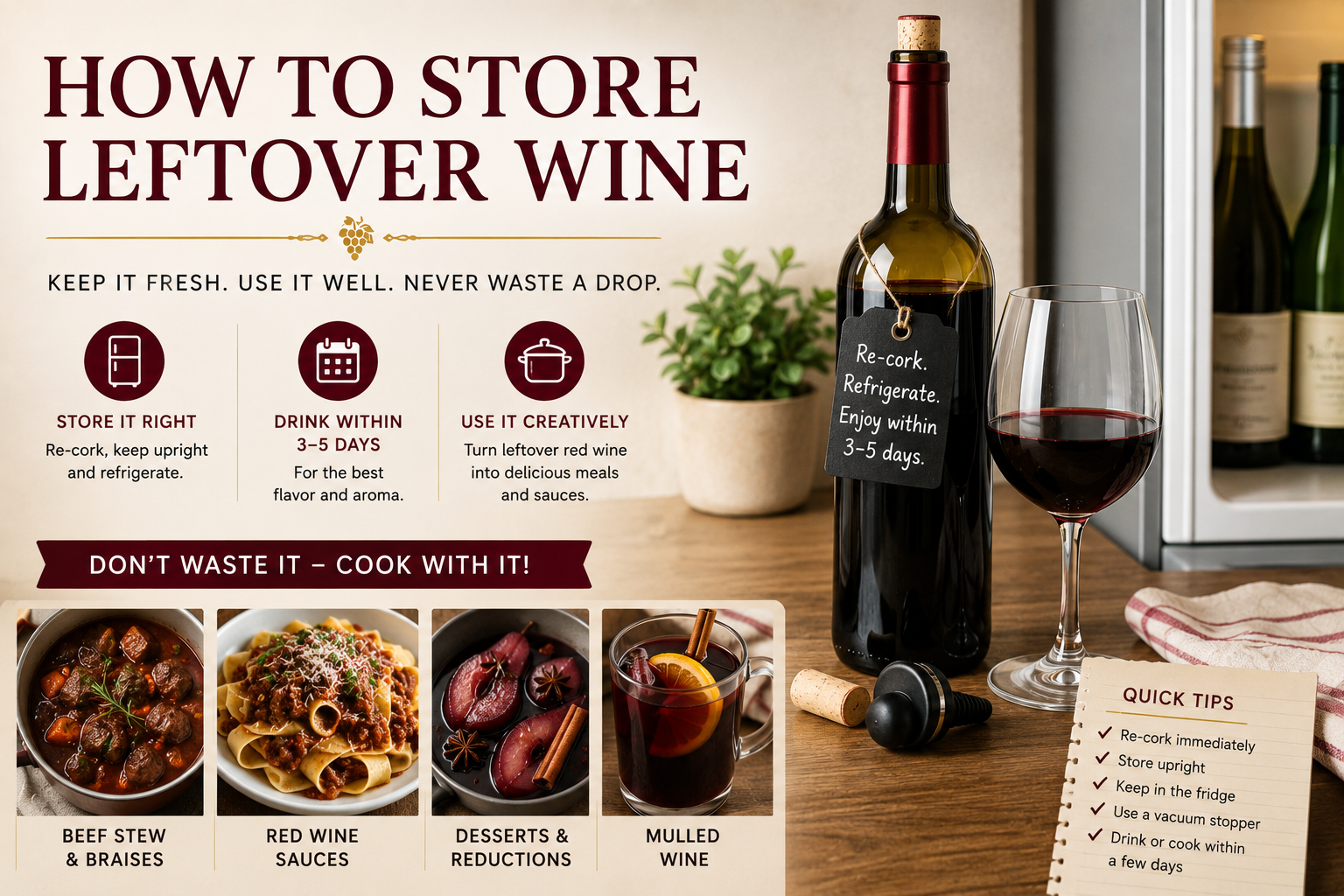
Opening a bottle of wine doesn’t always mean finishing it. Whether you enjoyed a glass with dinner or opened a special bottle for guests, knowing how to store leftover wine can help you keep it tasting fresh for days instead of hours.
Red wine is especially sensitive to oxygen, heat, and light once the bottle has been opened. The good news is that with a few simple steps, you can significantly extend the life of leftover wine and even find creative ways to use it in the kitchen.
In this guide of Avanti Wines
- How to store leftover wine properly
- How to store leftover red wine for maximum freshness
- How long opened wine actually lasts
- Common mistakes that spoil wine quickly
- How to use leftover red wine in cooking and beyond
Why Leftover Wine Goes Bad
Once a bottle is opened, oxygen begins reacting with the wine. This process, called oxidation, gradually changes the wine’s flavor, aroma, and texture.
Fresh wine: vibrant fruit flavors, balanced acidity, pleasant aromas.
Oxidized wine: flat flavors, muted fruit, sharp acidity, or a vinegary smell.
Heat, sunlight, and excessive air exposure accelerate this process, which is why proper storage matters.
How to Store Leftover Wine
If you remember only one thing from this article, remember this: reduce the wine’s exposure to air and keep it cool.
Step-by-Step
- Re-cork the bottle immediatelyUse the original cork if possible. Insert it back with the wine-stained side facing inward. If the cork is damaged, use a wine stopper.
- Store the bottle uprightUnlike unopened wine, leftover wine should be stored upright to reduce the surface area exposed to oxygen.
- Refrigerate itYes, even red wine. Cooler temperatures slow oxidation significantly.
- Use a vacuum stopper if you have oneVacuum wine pumps remove some of the air from the bottle and can add an extra day or two of freshness.
- Finish it within a few daysMost opened wines are at their best within 3–5 days.
Quick Tip
If you only have a small amount left, transfer it to a smaller bottle. Less empty space means less oxygen.
How to Store Leftover Red Wine
Many people mistakenly leave red wine on the counter after opening it. If you’re wondering how to store leftover red wine, the refrigerator is actually your best friend.
Do
Don’t
Re-cork immediately
Store upright
Keep in the refrigerator
Use a vacuum stopper if available
Consume within 3–5 days
Leave it open overnight
Store near heat or sunlight
Keep it next to the stove
Assume expensive wine lasts longer
Best Temperature for Leftover Red Wine
Storage
Around 7°C (45°F)
When you’re ready to drink it again, take it out of the fridge 20–30 minutes before serving so it can warm slightly.
How Long Does Leftover Wine Last?
| Wine Type | Typical Life After Opening |
|---|---|
| Light white wines | 3–5 days |
| Full-bodied white wines | 3–5 days |
| Rosé wines | 3–5 days |
| Red wines | 3–5 days |
| Fortified wines (Port, Sherry) | 1–3 weeks |
| Sparkling wines | 1–3 days |
Important
These are freshness guidelines, not strict safety limits. Wine rarely becomes dangerous after a few days, but the flavor can deteriorate dramatically.
Signs That Leftover Wine Has Gone Bad
Before pouring another glass, check for these warning signs.
Smells like vinegar
Acetic acid has developed and the wine is past its best.
Flat or dull flavor
The fruit character has disappeared.
Brownish color in red wine
Excessive oxidation has occurred.
Sharp, sour taste
Oxidation has gone too far.
If the wine smells and tastes unpleasant, it’s better to use it for cooking rather than drinking.
How to Use Leftover Red Wine
Don’t throw away wine that’s no longer perfect for drinking. If you’re searching for how to use leftover red wine, the kitchen offers plenty of delicious possibilities.
Red Wine Sauce
Reduce leftover wine with garlic, shallots, butter, and stock for a rich sauce that pairs beautifully with steak or roast meats.
Beef Stew or Braise
Red wine adds depth to slow-cooked dishes such as beef stew, short ribs, or lamb shanks.
Mulled Wine
Warm the wine with orange slices, cinnamon, cloves, and a little sugar for a comforting drink.
Red Wine Reduction for Desserts
Simmer wine with sugar until syrupy, then drizzle over strawberries, pears, or vanilla ice cream.
Freeze It for Cooking
Easy method
- Pour leftover wine into an ice cube tray.
- Freeze until solid.
- Transfer cubes to a freezer bag.
- Use 1–2 cubes whenever a recipe calls for wine.
This is one of the easiest ways to avoid waste.
Can You Cook with Wine That’s Too Old to Drink?
Yes, within reason.
Safe for cooking
Wine that has lost some freshness but still smells acceptable.
Avoid using
Wine that smells strongly of vinegar, nail polish remover, or mold. Cooking will not magically improve severely spoiled wine.
Best Containers for Storing Leftover Wine
| Container | Effectiveness |
|---|---|
| Original bottle with cork | Good |
| Vacuum-sealed bottle | Very good |
| Smaller glass bottle | Excellent |
| Plastic bottle | Fair for short-term storage |
For wine you plan to drink within a day or two, the original bottle is usually fine. For longer storage, transferring to a smaller bottle can make a noticeable difference.
Common Mistakes People Make
Leaving the bottle uncorked
Even a few hours of exposure can noticeably reduce freshness.
Storing red wine at room temperature after opening
Warm temperatures accelerate oxidation.
Keeping wine near the stove or in direct sunlight
Heat damages wine quickly.
Assuming expensive wine lasts longer once opened
Price doesn’t protect wine from oxygen.
A Simple Rule to Remember
Re-cork, refrigerate, reduce air exposure, and drink within 3–5 days.
Following these four steps will preserve most leftover wines surprisingly well.
Looking for your next bottle? Explore Avanti Wines’ collection of premium Italian wines including Campania Aglianico, Merlot Wine, Montepulciano d’Abruzzo, Nero d’Avola, and Pinot Grigio, or browse the full wine collection to discover your perfect match.
Final Thoughts
Learning how to store leftover wine is one of the easiest ways to reduce waste and enjoy every bottle to the fullest. The same principles apply when figuring out how to store leftover red wine: seal it, keep it cool, and minimize contact with air.
And if the wine is no longer ideal for drinking, don’t pour it down the sink. There are countless delicious ways to answer the question of how to use leftover red wine, from sauces and stews to mulled wine and frozen cooking cubes.
A little care can turn leftover wine from a problem into an opportunity.
Follow Us On Instagram!